
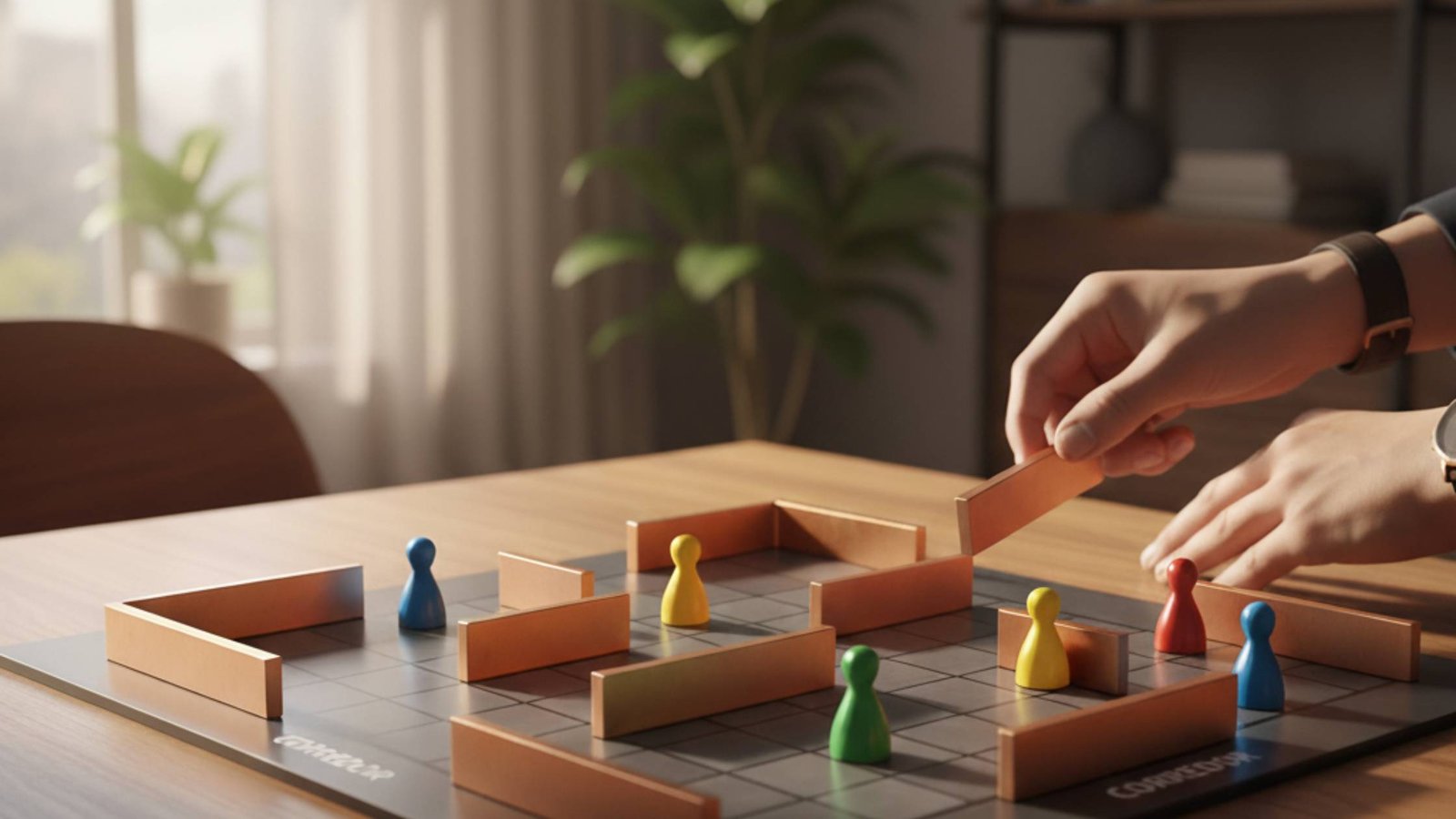
If you’ve ever played Carricade once, you know—it’s not just a game of movement, it’s a battle of minds. The wooden board might look simple, but every pawn step and wall placement can change the entire course of the match. Whether you’re new to this game or already hooked on its tactical charm, mastering a few expert strategies can take you from casual player to unbeatable challenger.
Let’s dive into seven practical strategies that can help you outsmart your opponents every single time.
1. The First-Move Advantage: Claim the Center Early
Just like chess, control begins from the center. When you start your Carricade game on the ODWAG premium board, focus your first few  moves toward the middle tiles.
The center gives your pawn flexibility—you can move in multiple directions and respond faster to your opponent’s fence placements. Think of it as your “command post.” From there, you dictate the game, not the other way around.
Pro Tip: Avoid hugging the corners early on. It limits your movement and makes it easy for your opponent to block your path with just one or two walls.
2. Use Fences Strategically, Not Emotionally
A common beginner mistake? Placing fences too soon.
Every fence on the ODWAG Carricade board is a strategic asset, not a weapon to throw impulsively. Before you drop a wall, ask yourself—“Does this move push me forward or just slow my opponent down temporarily?”
Use fences to:
- Redirect your opponent into longer routes.
- Create small “mazes” that force them to waste moves.
- Protect your path while ensuring an alternate route is open.
Remember, you can’t trap anyone completely—the rules require that at least one path remains open. So think long-term, not just immediate.
3. The Mirror Defense: Copy Their Movement (Until It Hurts Them)
Here’s a psychological move professionals swear by.
When your opponent advances two tiles forward, you do the same. When they go right, mirror their step. This keeps your position symmetrical and gives you equal access to opportunities. But the key lies in knowing when to break symmetry.
At some point, you’ll see their pawn blocked by their own fence or misplacement. That’s when you deviate—cut across diagonally, creating a lead that they’ll struggle to recover from.
It’s patience meets precision.
4. Jump Tactics: Leap at the Right Time
Carricade allows you to jump over an opponent’s pawn if they’re standing directly in front of you. Many players overlook this simple yet powerful mechanic.
The jump is not just an escape—it’s an opportunity to gain instant positional advantage.
When you see your opponent right in front, assess the path behind them. If the tiles are clear and no wall is blocking the way, jump immediately. It saves a move and confuses your rival’s defense.
But avoid over-using it. If you jump into a closed corner or wall trap, you’ll lose your momentum quickly.
5. Fence Chain Strategy: Build a Wall Network, Not a Random Block
Instead of placing fences sporadically, start chaining your fences like a connected barrier. This forces your opponent into predictable routes.
Professional players often create a pattern—like a zigzag or double-layer wall—to gradually corner the other pawn while still keeping their own route free.
This strategy works beautifully on ODWAG’s precision-cut wooden grid, because the alignment is exact. That means your fences fit seamlessly, giving you a clean tactical layout without confusion.
6. The Bait & Switch Move: Tempt, Then Trap
This is where mind games begin.
Sometimes, the smartest way to win Carricade isn’t blocking—it’s baiting.
Move your pawn deliberately toward one side, making your opponent believe you’re committed there. When they start stacking fences to block that lane, quickly switch your direction and dash through the opposite side.
This move exploits human psychology—people tend to over-defend the area they think you’re attacking. With a few deceptive moves, you can lead them right into wasting their fences while you glide past to victory.
7. Endgame Discipline: Keep Calm, Count Steps
When you’re just a few tiles away from the finish line, emotions can ruin a perfect match. This is where discipline separates winners from beginners.
Count your remaining steps, visualize your route, and resist the urge to place unnecessary walls.
Your opponent will panic and throw fences randomly—that’s your cue to stay composed and keep moving in a straight, efficient line.
Remember: The fastest path isn’t always the shortest—it’s the one least likely to be interrupted.
Bonus Tip: Play More, Think Less
Like any strategic board game, Carricade rewards experience. Every time you play, you start recognizing patterns—how certain fence placements always lead to predictable traps, or how positioning your pawn diagonally opens hidden lanes.
The beauty of ODWAG’s premium wooden Carricade board is that it’s built for repeated use. The durable pinewood and perfectly cut grid mean you can play endlessly without wear and tear. Over time, your brain naturally adapts to spotting shortcuts and anticipating your opponent’s psychology.
Why ODWAG’s Carricade Makes the Difference
While strategy is key, the quality of your board matters more than most players realize. ODWAG’s handcrafted wooden Carricade is designed for precision—every fence and tile aligns perfectly, ensuring you focus purely on gameplay, not fixing misplaced parts.
Its sturdy pinewood build, smooth finish, and portable size make it the perfect companion for:
- Family game nights
- Friendly tournaments
- Teaching kids problem-solving and patience
It’s not just a pastime—it’s a mental workout that never feels repetitive.
Final Thoughts
Winning Carricade isn’t about luck—it’s about thinking three moves ahead, staying calm under pressure, and using every fence like a chess piece. Once you master these seven strategies, you’ll start noticing something magical—your opponents won’t even realize when you’ve already planned their defeat.
So, if you haven’t yet, grab your ODWAG Premium Wooden Carricade Board Game, call a friend or two, and put these expert moves to the test.
You’ll see how every match becomes smarter, sharper, and more addictive than the last.